Kage
Kage is an orchestrator for coding agents with a verified memory layer. It captures what agents learn as plain Markdown files in your repo, checks that knowledge against your actual code, and re-runs checks itself before merging agent work. It is for developers and teams using coding agents who want shared, trustworthy, and stale-free project memory without cloud lock-in.
✨ Key features
- Verified memory: checks citations against code at write, recall, and diff time.
- Collaborative: memory shared via git, no account or API key required.
- OKF standard: memory stored as Open Knowledge Format Markdown in repo.
- Orchestrator: briefs agents, runs in isolated worktrees, verifies claims itself.
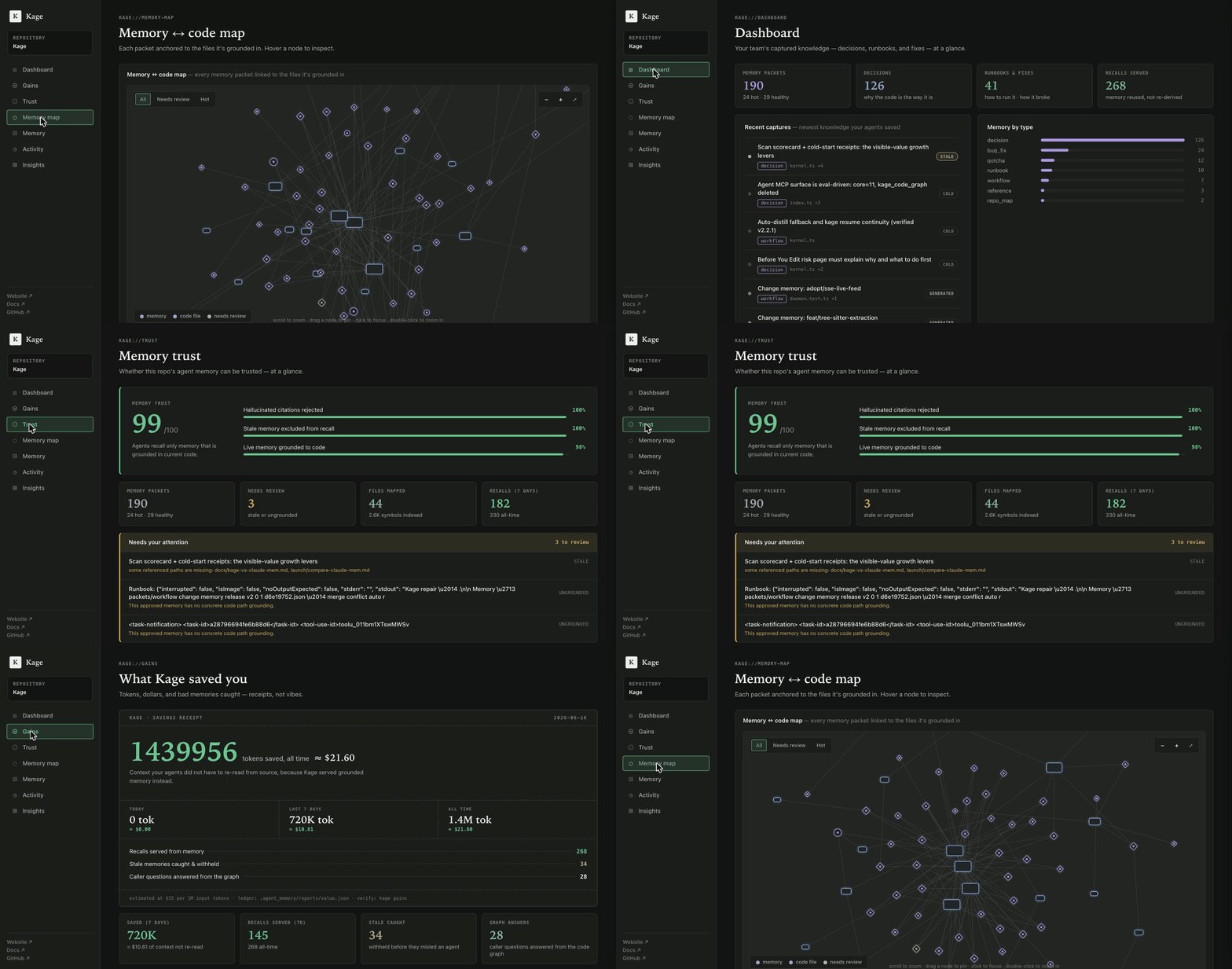
- Truth Report: scans repo for knowledge gaps and risks in ~60s.
- Savings receipts: tracks tokens and dollars saved per repo.
🎯 Use cases
- Capture and reuse team knowledge about code decisions, runbooks, and bug fixes.
- Delegate coding tasks to agents with memory-based briefs and verified outcomes.
- Prevent stale or hallucinated memory from misleading agents.
- Generate reports on undocumented hot files, untested paths, and complexity hotspots.
- Sync personal memory across machines using your own git remote.
📦 Installation
🧰 Requirements: Requires Node.js 18+. No account, no API key.
npx -y @kage-core/kage-graph-mcp install
Or ask your agent to set it up: paste this into Claude Code, Cursor, or any coding agent:
Set up Kage (verified memory for coding agents, https://github.com/kage-core/Kage) in this repo: run
npx -y @kage-core/kage-graph-mcp install, then tell me to restart you.
Other ways:
/plugin marketplace add kage-core/Kage # then: /plugin install kage@kagekage setup claude-code --project . --writekage init --project .kage setup verify-agent --agent claude-code --project .🚀 Usage
kage room --project .                      # talk to Kage; it briefs and hires agents for you
kage dispatch " " --agent claude    # one delegated run, briefed from repo memory
kage runs --project .                      # what every run is doing right now
kage review --project .                    # read a finished run's claim and diff
kage merge <run-id> --project .            # land the code and ratify what it learned
⚠️ Good to know
The desktop app is macOS arm64 only; Windows/Linux packaging isn't built yet. LAN access requires manual config. Some features like --lan flag are not yet available.
❓ FAQ
How does Kage verify agent claims?
Kage runs its own checks (tests, diff size, citations) rather than trusting the agent's report. It inspects cited paths and runs commands itself, then only merges if the claim holds.
Where is memory stored?
Memory is stored as plain Markdown files in .agent_memory/ in your repo, conformant to the Open Knowledge Format (OKF). It is shared via git and requires no external database or cloud.
Does Kage require an account or API key?
No. Kage requires no account, no API key, and no database. It runs locally and uses your own git remote for sync if needed.
What agents does Kage work with?
Kage works with Claude Code, Codex, Cursor, Windsurf, Gemini CLI, Cline, Goose, Roo Code, Kilo Code, OpenCode, Aider, Claude Desktop, Copilot, OpenClaw, Hermes, and any MCP client.
📊 Repository
🤖 Overview, features, install steps and FAQ were generated from the project's README on Sep 4, 2026. Always check the original source before running commands.