Caura
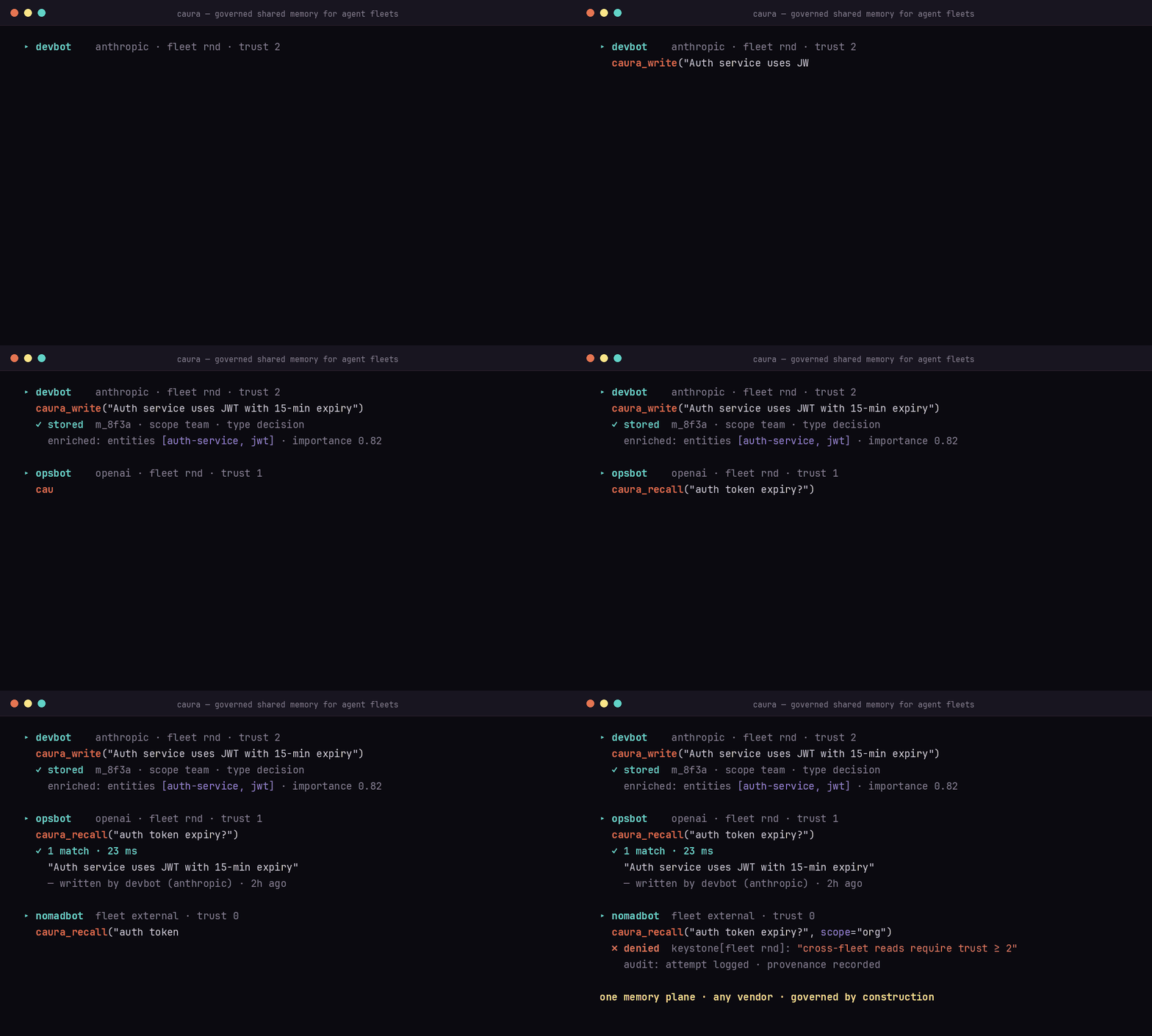
Caura (formerly MemClaw) is an open-source, shared governed memory layer for multi-tenant, multi-agent AI fleets. It lets agents store what they learn, find what the fleet knows, and improve from every interaction, with governance features like tenant isolation, visibility scopes, and trust tiers. It is for developers building AI agent systems that need shared, auditable memory across multiple agents or teams.
✨ Key features
- Tenant isolation with row-level database separation
- Visibility scopes: agent-private, fleet-wide, or org-wide
- Agent trust tiers controlling cross-fleet access
- Single-pass LLM enrichment: auto-classify, title, summarize, flag PII
- Hybrid search: semantic + keyword + knowledge graph expansion
- Contradiction detection and automatic supersession
🎯 Use cases
- Give a fleet of AI agents shared memory so they learn from each other
- Enforce governance on what agents can read, write, or delete across teams
- Reduce token usage by recalling relevant memories instead of full context
- Maintain an auditable knowledge base of operational lessons and procedures
- Enable cross-agent recall of solutions, like rollback procedures, within a fleet
📦 Installation
🧰 Requirements: Requires Docker for self-hosting (Postgres, pgvector, Redis). For semantic search, an AI provider key (OpenAI, Gemini, etc.) is needed; standalone mode works without keys. Managed platform requires signup at caura.ai.
Self-Hosted (Docker)
git clone https://github.com/caura-ai/caura.git
cd caura
cp .env.example .env && echo "IS_STANDALONE=true" >> .env   # single-tenant, no API key
docker compose up -d --wait                                 # Postgres + pgvector + Redis + API (~30s)
Python client
pip install caura-client
TypeScript client
npm install @caura/client
🚀 Usage
Write a memory (no API key needed)
curl -X POST http://localhost:8000/api/v1/memories \
  -H "X-API-Key: standalone" -H "Content-Type: application/json" \
  -d '{"tenant_id": "default", "agent_id": "quickstart", "write_mode": "strong", "content": "Our auth service uses JWT with 15-minute expiry."}'
Find it by keyword
curl -X POST http://localhost:8000/api/v1/search \
  -H "X-API-Key: standalone" -H "Content-Type: application/json" \
  -d '{"tenant_id": "default", "query": "JWT expiry"}'
❓ FAQ
What is the difference between Caura and MemClaw?
Caura is the new name for MemClaw. The product is the same; only the tool names, package names, and URLs have changed. The old memclaw_* tool names and env vars still work, and the MemClaw class remains an alias in caura-client.
Do I need an API key to try Caura locally?
No. In standalone mode (IS_STANDALONE=true), auth is bypassed and dummy embeddings are used, so you can write and search memories without any API key. For semantic search, you need to configure an AI provider.
How does Caura handle governance across multiple agents?
Caura provides tenant isolation, visibility scopes (agent, team, org), and agent trust tiers. Each memory is stamped with a visibility scope, and cross-fleet recall is permissioned. Agents can be provisioned with scoped credentials.
What benchmarks does Caura report?
Caura reports 77.6% accuracy on LoCoMo and 72.5% on LongMemEval, with token savings of 96.6% and 98.2% respectively, and search latency of 23 ms p50 and 27 ms p95.
📊 Repository
🤖 Overview, features, install steps and FAQ were generated from the project's README on Sep 4, 2026. Always check the original source before running commands.