EvoAgentX
EvoAgentX is an open-source framework for building, evaluating, and evolving LLM-based agents or agentic workflows in an automated, modular, and goal-driven manner. It enables developers and researchers to move beyond static prompt chaining by introducing a self-evolving agent ecosystem where agents are constructed, assessed, and optimized through iterative feedback loops. It is for AI researchers, workflow engineers, and startup teams building real-world AI agents.
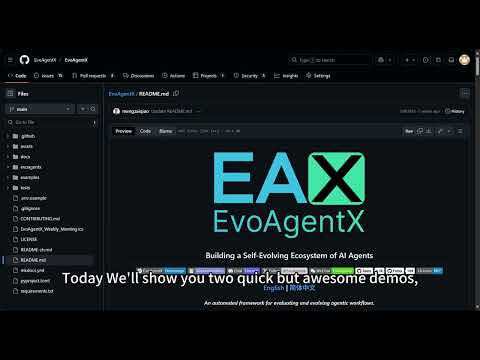
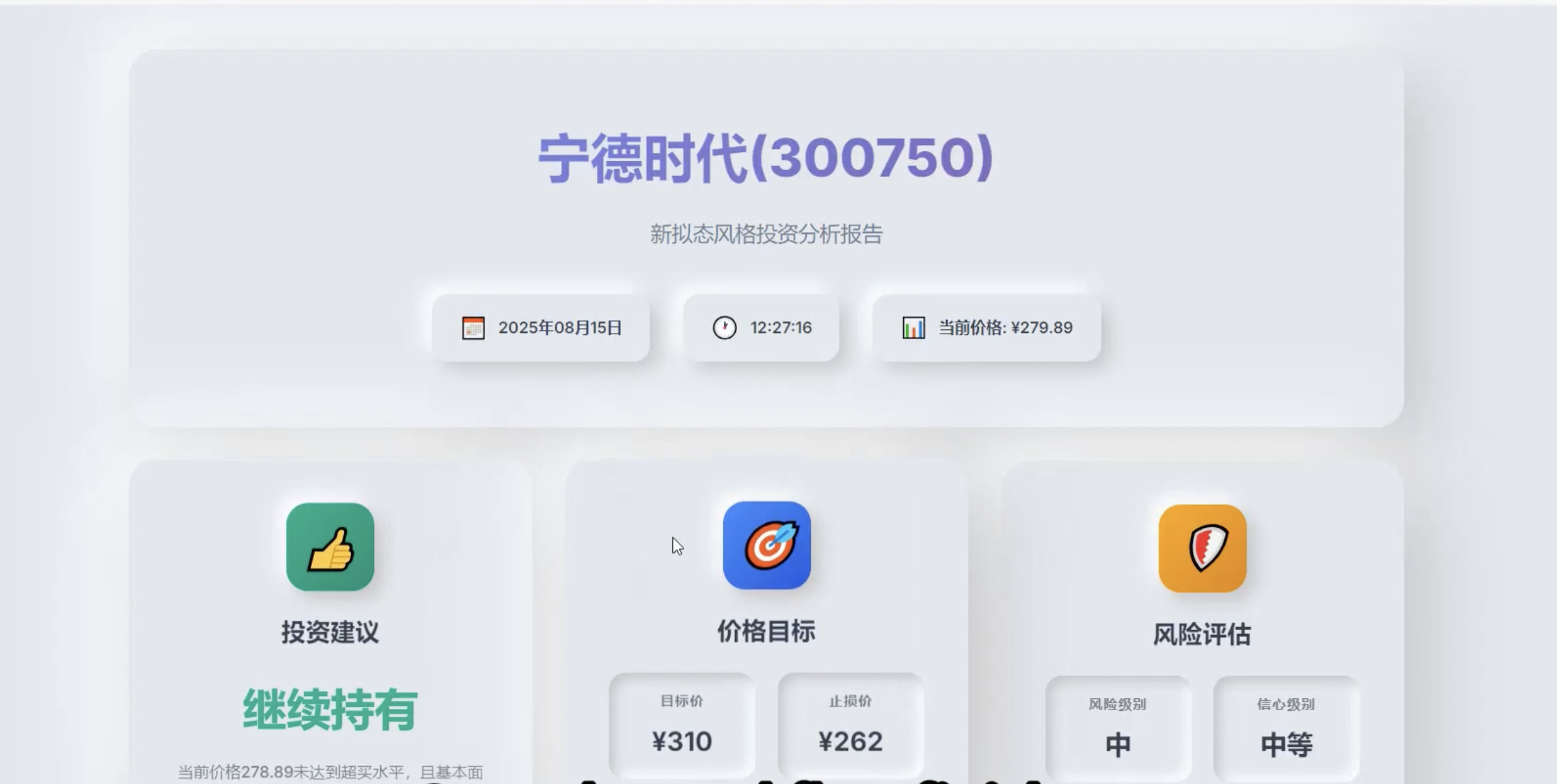
🎬 EvoAgentX Demo | Self-Evolving Agents in Action: Stock Analysis Assistant & arXiv Paper Recommender · EvoAgentX
✨ Key features
- Automatically constructs multi-agent workflows from a single prompt.
- Integrates automatic evaluators to score agent behavior.
- Self-evolution engine improves workflows using self-evolving algorithms.
- Plug-and-play compatibility with OpenAI, qwen, and other models via LiteLLM.
- Comprehensive built-in tools for code, search, files, databases, and browsers.
- Supports short-term and long-term memory modules.
🎯 Use cases
- Automatically generate and execute a multi-agent workflow for a task like generating HTML code for a game.
- Evolve and optimize existing agentic workflows using self-evolving algorithms.
- Insert human-in-the-loop checkpoints to review and guide agent behavior.
- Build agents that interact with real-world environments using built-in tools.
- Create agents with memory to remember and improve across interactions.
📦 Installation
🧰 Requirements: Python 3.11 or later, an OpenAI API key (or other LLM provider key), and optionally a .env file for configuration.
pip install evoagentx
or install from source:
pip install git+https://github.com/EvoAgentX/EvoAgentX.git
For local development (optional):
git clone https://github.com/EvoAgentX/EvoAgentX.git
cd EvoAgentX
conda create -n evoagentx python=3.11
conda activate evoagentx
pip install -r requirements.txtpip install -e .🚀 Usage
import os
from evoagentx.models import OpenAILLMConfig, OpenAILLM
from evoagentx.workflow import WorkFlowGenerator, WorkFlowGraph, WorkFlow
from evoagentx.agents import AgentManager

# Set API key (ensure OPENAI_API_KEY is set in environment)
OPENAI_API_KEY = os.getenv("OPENAI_API_KEY")

# Configure LLM
openai_config = OpenAILLMConfig(
    model="gpt-4o-mini",
    openai_key=OPENAI_API_KEY,
    stream=True,
    output_response=True
)
llm = OpenAILLM(config=openai_config)

# Generate and execute workflow
goal = "Generate html code for the Tetris game"
workflow_graph = WorkFlowGenerator(llm=llm).generate_workflow(goal)
agent_manager = AgentManager()
agent_manager.add_agents_from_workflow(workflow_graph, llm_config=openai_config)
workflow = WorkFlow(graph=workflow_graph, agent_manager=agent_manager, llm=llm)
output = workflow.execute()
print(output)
❓ FAQ
How do I install EvoAgentX?
You can install it via pip with pip install evoagentx or from source with pip install git+https://github.com/EvoAgentX/EvoAgentX.git.
What LLMs are supported?
EvoAgentX supports OpenAI and qwen models natively, and other models like Claude, Deepseek, and kimi via LiteLLM, siliconflow, or openrouter.
Can I use EvoAgentX without an API key?
No, you need to configure an LLM API key (e.g., OPENAI_API_KEY) to use the framework.
Does EvoAgentX support human oversight?
Yes, it supports Human-in-the-Loop (HITL) interactions where humans can review, correct, and guide agent behavior.
📊 Repository
🤖 Overview, features, install steps and FAQ were generated from the project's README on Sep 4, 2026. Always check the original source before running commands.